

In nearly every serious conversation about Iran’s political future, one name continues to surface: Reza Pahlavi. To supporters, he represents continuity of nationhood without clerical rule. To many younger Iranians, he symbolizes a secular alternative in a political landscape where genuine opposition leadership is systematically suppressed.
Reza Pahlavi was born in 1960, the eldest son of Mohammad Reza Pahlavi and Empress Farah Pahlavi. As Crown Prince, he was raised to one day serve his country. But when the Iranian Revolution erupted in 1979, he was not seated in a palace—he was in the United States training to become a fighter jet pilot for Iran’s Imperial Air Force. At just 18 years old, preparing for a military career in defense of his homeland, he instead became an exile overnight as the Islamic Republic took power under Ayatollah Khomeini.
At that moment, he faced a choice.
He could have disappeared quietly into American life. With education, connections, and resources, he could have lived comfortably, built a private career, and gone gently into the night, detached from Iran’s political turmoil. Many in his position would have done exactly that.
He chose a different path.
Instead of retreating, Reza Pahlavi stepped into a decades-long commitment to Iran’s future. Over time, he reshaped his public role. No longer presenting himself as a monarch-in-waiting demanding automatic restoration, he has repeatedly stated that the Iranian people alone must determine their system of government, whether a republic or a constitutional monarchy, through a free and democratic referendum.
For me, that commitment became personal in 2003. I had the opportunity to sit down with him for a two-hour, one-on-one conversation. It was not a staged event or a public speech, just an extended, direct discussion at a mutual friend’s house. I came away convinced that he was not driven by nostalgia or entitlement, but by a deep sense of patriotism and his responsibility toward Iran and its people. His focus was not on reclaiming a throne, but on rescuing a nation from a tyrannical regime that has occupied Iran for nearly five decades. That conversation solidified my belief that he is uniquely positioned to help guide Iran through a democratic transition.
For more than four decades, he has consistently advocated for a secular democratic state, separation of religion and government, equal rights for women and minorities, freedom of expression, and peaceful civil resistance. While opposition movements have splintered along ideological lines, his message has remained focused on national unity and popular sovereignty.
Supporters argue that this consistency is precisely why his relevance has endured. In a political environment where parties are banned, dissent is criminalized, and leadership inside the country is suppressed, recognizable figures inevitably carry weight. Pahlavi’s lineage gives him historic legitimacy; his sustained activism gives him contemporary credibility.
Critics point to the shortcomings of the pre-1979 monarchy, including political repression. But Pahlavi has publicly acknowledged that no era is without flaws and has emphasized that any future system must be democratic, constitutional, and accountable. He has not demanded power; he has argued for a process.
Nearly five decades after exile, the persistence of his name in Iranian political discourse is telling. It reflects not merely nostalgia, but an ongoing search for stable, secular governance and national restoration.
When history forced him into exile, Reza Pahlavi could have chosen anonymity and comfort. Instead, he chose engagement and advocacy. And for those of us who have looked him in the eye and heard his vision firsthand, the conclusion is clear: he is not a figure of the past, but a serious contender for Iran’s future.
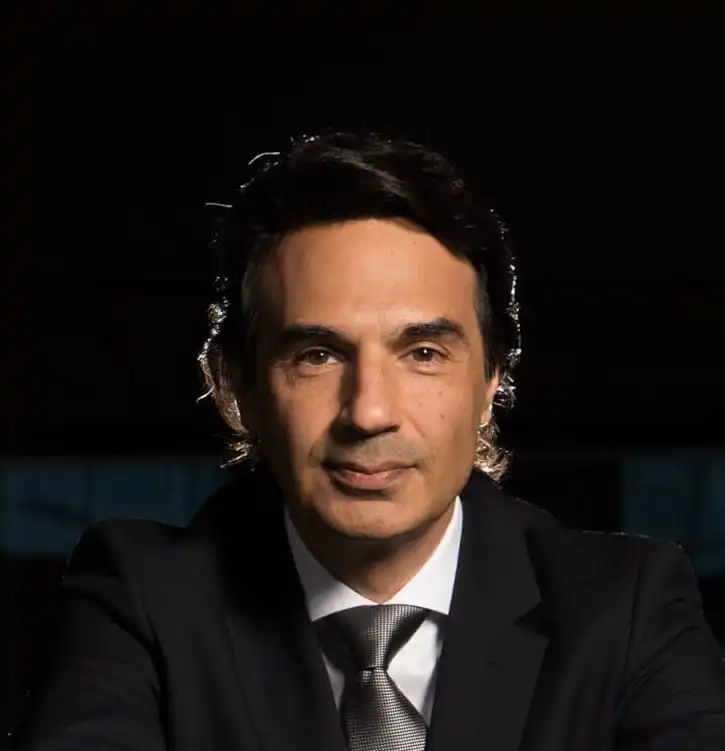
About the Author:
Shahrokh Rezai is an Iranian entrepreneur based in the United States and a longtime activist and analyst of Iran’s diaspora movements since the 1990s.
For more about the author, click here.
-
Museum of Ice Cream Vegas
The Sweetest New Attraction Has Arrived in Las Vegas By Briana Mercado Real Vegas Magazine If you’ve been scrolling through social media lately, chances are you’ve seen everyone talking about the new Museum of Ice Cream. From colorful rooms to endless photo opportunities, it has quickly become one of the most talked about attractions in…
-
The Opportunity-Ready Skillset: How to Grow Your Career and Lead in a Changing Business World
Individuals who want new opportunities in the business sector usually don’t need a complete reinvention—they need a sharper set of job skills and leadership habits that travel well across roles, teams, and industries. The good news: most of the growth happens in small, repeatable moves you can practice while you keep doing your day job….
-
This is not War, but a Humanitarian Rescue Mission
Words matter. The language we use shapes how we understand events and how history will judge them. What is unfolding between the United States, Israel, and the ruling regime in Iran should not be casually labeled as “war.” War implies conquest, occupation, and domination. This is not that. This is a humanitarian rescue mission, one…
-
Top 11 Must-Try Brunch Spots in Las Vegas (2025 Edition)
Las Vegas and brunch go together like sunshine and mimosas. As Eater rightly notes, “if any city serves up a decadent brunch, it has to be Las Vegas” . From endless Bloody Marys to creative French toast, Vegas brunches spare no indulgence. I’ve savored everything from French-Californian tasting menus to laid-back patios under the palms….
Leave a Reply