

Words matter. The language we use shapes how we understand events and how history will judge them. What is unfolding between the United States, Israel, and the ruling regime in Iran should not be casually labeled as “war.” War implies conquest, occupation, and domination. This is not that. This is a humanitarian rescue mission, one intended to help free a nation that has been held captive by its own government for nearly half a century.
The Iranian people have endured repression that most Americans can scarcely imagine. Peaceful protesters have been beaten, imprisoned, and killed. Women have faced violence for asserting the most basic personal freedoms. Journalists have been silenced, dissent criminalized, and fear institutionalized. Yet despite this, the Iranian people have never stopped resisting. They have made clear, time and again, that they seek freedom, dignity, and self-determination.
It is important to confront an uncomfortable truth: you cannot let your hatred of Donald Trump or your hostility toward Israel cloud your judgment about what is right and what is wrong. Human rights are not partisan. Freedom is not ideological. If Americans believe in liberty as a universal principle, then that belief must extend beyond their borders. The suffering of millions should not be ignored simply because of who happens to be involved in helping bring it to an end.
Americans should also understand what this mission is, and what it is not. This is not World War II. This is not Vietnam. This is not Iraq in 2003. There will be no invasion, no occupation, and no boots on the ground. This is not an attempt to conquer Iran or impose foreign rule. It is a campaign of strategic, targeted air strikes aimed at weakening the regime’s machinery of repression, giving the Iranian people the opportunity to finish what they have already begun. The objective is not regime change imposed from the outside, but liberation achieved from within.
Critics warn that Iran could descend into chaos, becoming another Syria or Iraq. This argument ignores the fundamental reality of Iran’s identity and society. Iran is one of the world’s oldest continuous civilizations, with more than 2,500 years of recorded history, culture, and national consciousness. Its identity was not artificially drawn in modern times. It has endured through empires, invasions, and revolutions while maintaining a deep and cohesive sense of nationhood.
Iran also has one of the most educated populations in the region. Its people are highly literate, globally connected, and deeply aware of the freedoms they have been denied. They are not defined by tribal fragmentation or sectarian division. Iranians are not Arabs. They are a distinct people, with their own language, history, and national identity. This shared identity provides the foundation for unity and stability during a political transition.
Equally important, there is already a credible opposition leader prepared for the day after: Reza Pahlavi. For decades, he has consistently advocated not for the restoration of monarchy, but for a secular, democratic system in which the Iranian people themselves choose their form of government through free elections and referendum. His message has been one of national unity, democratic transition, and peaceful reconstruction.
More importantly, he has backed those words with preparation. Through the Iran Prosperity Project, he brought together panels of economists, legal scholars, policy experts, and professionals to develop a comprehensive roadmap for Iran’s future. This initiative outlines practical plans for economic stabilization, restoration of essential services, establishment of democratic institutions, and long-term national recovery. This is not theoretical, it is a structured plan designed to ensure stability and prevent chaos during a transition.
The regime’s greatest fear today is not foreign governments. It is its own people. The protests of recent years have demonstrated extraordinary courage. Young people, women, workers, and ordinary citizens have risked everything to demand freedom. They are not asking foreign soldiers to fight on their behalf. They are asking for the opportunity to reclaim their country themselves.
Strategic external pressure can help level the playing field between an unarmed population and a heavily armed authoritarian state. It can weaken the instruments of repression and create the conditions necessary for meaningful change. Ultimately, however, the future of Iran will be decided by Iranians.
This is not about destroying a nation. It is about giving a nation the chance to save itself.
History will not judge this moment by political loyalties or partisan divisions. It will judge it by whether the world stood on the side of freedom or turned away. The Iranian people have shown they are ready. They have shown they are willing.
This is not war.
This is rescue.
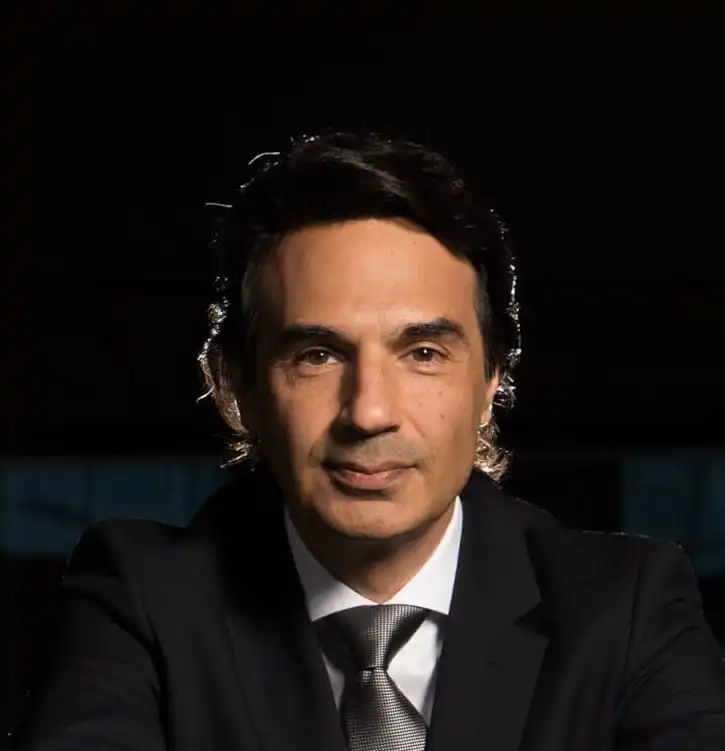
About the Author:
Shahrokh Rezai is an Iranian entrepreneur based in the United States and a longtime activist and analyst of Iran’s diaspora movements since the 1990s.
For more about the author, click here.
Follow him on x, @ShaRez63
-
Museum of Ice Cream Vegas
The Sweetest New Attraction Has Arrived in Las Vegas By Briana Mercado Real Vegas Magazine If you’ve been scrolling through social media lately, chances are you’ve seen everyone talking about the new Museum of Ice Cream. From colorful rooms to endless photo opportunities, it has quickly become one of the most talked about attractions in…
-
The Opportunity-Ready Skillset: How to Grow Your Career and Lead in a Changing Business World
Individuals who want new opportunities in the business sector usually don’t need a complete reinvention—they need a sharper set of job skills and leadership habits that travel well across roles, teams, and industries. The good news: most of the growth happens in small, repeatable moves you can practice while you keep doing your day job….
-
Who Is Reza Pahlavi — and Why Are Iranians Chanting His Name?
In nearly every serious conversation about Iran’s political future, one name continues to surface: Reza Pahlavi. To supporters, he represents continuity of nationhood without clerical rule. To many younger Iranians, he symbolizes a secular alternative in a political landscape where genuine opposition leadership is systematically suppressed.
Reza Pahlavi was born in 1960, the eldest son of Mohammad Reza Pahlavi and Empress Farah Pahlavi. As Crown Prince, he was raised to one day serve his country. But when the Iranian Revolution erupted in 1979, he was not seated in a palace—he was in the United States training to become a fighter jet pilot for Iran’s Imperial Air Force. At just 18 years old, preparing for a military career in defense of his homeland, he instead became an exile overnight as the Islamic Republic took power under Ayatollah Khomeini.
At that moment, he faced a choice.
He could have disappeared quietly into American life. With education, connections, and resources, he could have lived comfortably, built a private career, and gone gently into the night, detached from Iran’s political turmoil. Many in his position would have done exactly that.
-
Top 11 Must-Try Brunch Spots in Las Vegas (2025 Edition)
Las Vegas and brunch go together like sunshine and mimosas. As Eater rightly notes, “if any city serves up a decadent brunch, it has to be Las Vegas” . From endless Bloody Marys to creative French toast, Vegas brunches spare no indulgence. I’ve savored everything from French-Californian tasting menus to laid-back patios under the palms….
Leave a Reply